

Think you know everything there is to know about sunscreen? Although it’s an integral part of many of our skincare routines, there are a few rules of this healthy-skin must-have that you might be missing.
From the SPF number you should be using daily to the exact amount (and where you should be applying it), let’s take a look at a few of the little-known facts about sunscreen.
7 Rules for Using Sunscreen the Right Way
1. Aim for SPF 30 to 50 (At Least)
Unfortunately, there is no such thing as 100% protection from the sun with sunscreen. And while a sunscreen with a higher SPF definitely provides slightlybetter skin protection, for daily use, you probably only need a sunscreen that’s at least SPF 30.
But once the SPF is at 50, you’ve hit your limit for protection. That’s because, while there’s a big difference between SPF 15 and SPF 30 or 50, there is no significant difference between SPF 50 and SPF 100. It goes like this:
- SPF 15: Blocks about 93% of UVB rays
- SPF 30: Blocks about 97% of UVB rays
- SPF 50: Blocks about 98% of UVB rays
- SPF 100: Blocks about 99% of UVB rays
That being said, if you’re more comfortable using the highest SPF you can find, just do it! It won’t hurt; it just won’t help as much as you may think.
2. Look for “Broad Spectrum” Protection

The “SPF” label on sunscreen only indicates its protection against UVB (Ultraviolet B) rays—the rays that leave your skin sunburned and itchy. However, your skin is still vulnerable to UVA (Ultraviolet A) rays, which have a longer wavelength and penetrate the skin more deeply.
UVA rays are the ones responsible for contributing to lines, wrinkles, pigmentation, laxity, and skin cancer. So while you may be protected from sunburn, you’re not protected from signs of aging. That’s why you should look for sunscreens labeled as “broad spectrum,” which indicates protection against both types of harmful UVB and UVA rays.
3. Try Not to Miss Any Spots
It’s a common mistake to miss spots when applying sunscreen—and that’s where cumulative sun damage can really add up. While it’s vital to cover your face, neck, and upper chest with sunscreen every day, people often forget:
- The tops, backs, and lobes of the ears
- Eyelids (which are extremely thin)
- Lips (try an SPF-infused lip balm)
- The tops of hands and feet
- Hairline and scalp (use a spray-on SPF for this area)
Don’t forget: All scars should be covered with broad-spectrum sunscreen at all times in order to help them heal faster. Not only do you run the risk of hyperpigmentation (discoloration or darkening of the skin) if you don’t, but skin cancer is also more likely to develop in those spots because the skin is already damaged.
4. Apply (and Reapply) More Than You Think
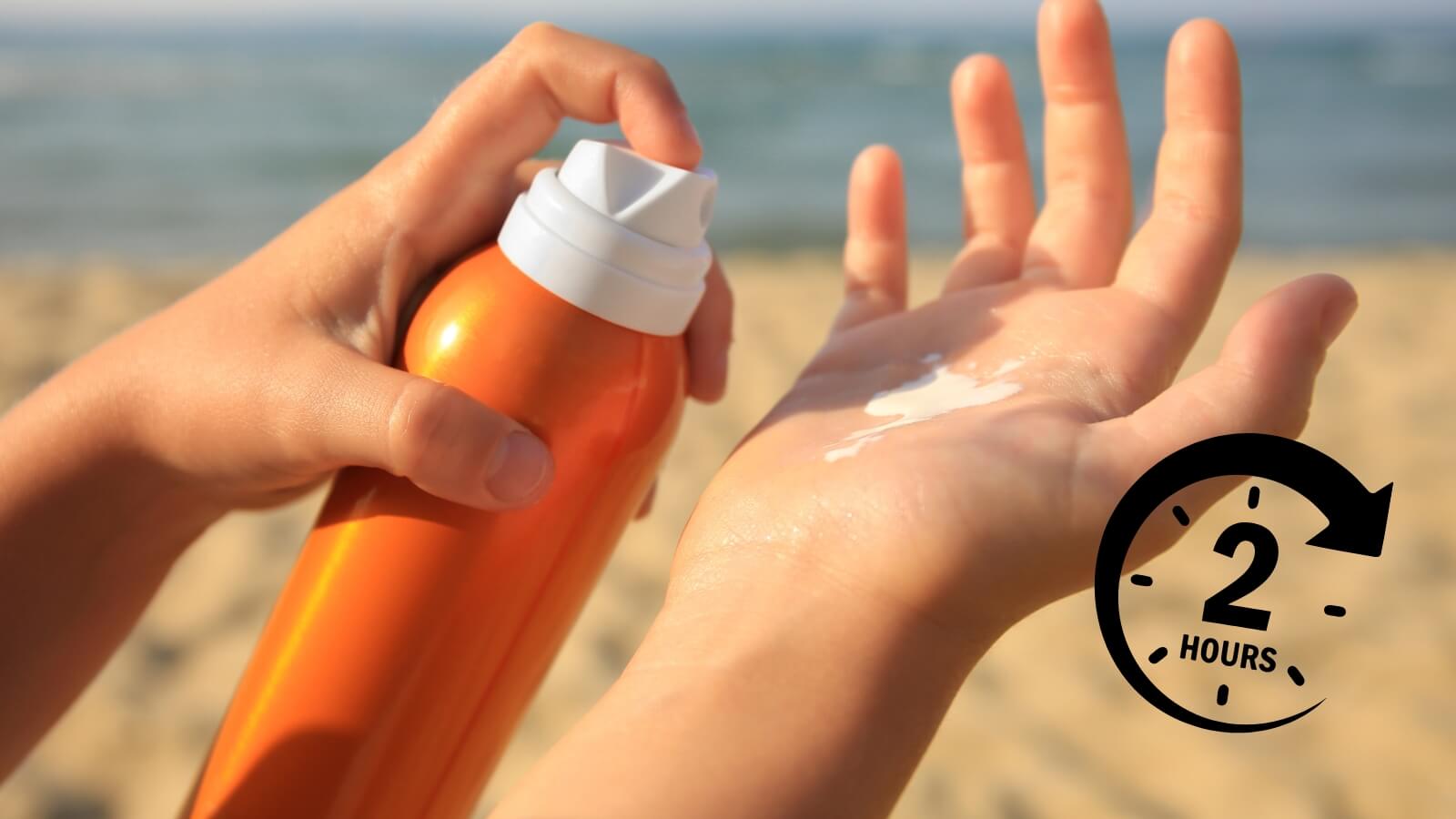
If you’re applying sunscreen correctly, you should be using more than you think. Instead of a dime-sized amount, think of a marble-sized dollop for your face and ears, and another for your neck and upper chest. Remember, it’s best to reapply every two hours when spending a lot of time in the sun, like during a hike or beach day.
Even water-resistant sunscreen can lose its effectiveness after prolonged sweating or swimming and will need to be reapplied. (Always reapply immediately after getting out of a pool or a body of water!) It may help to carry a travel-sized bottle or sunscreen stick in your bag for quick reapplication throughout the day.
5. Ditch Last Year’s Sunscreen
If you have sunscreen left over from last season, it’s time to pitch it and re-stock! Sunscreen does expire—most have a shelf life of up to three years, but it’s important to double-check the expiration date.
Even if your sunscreen hasn’t expired, it still may be best to buy a new bottle every year. Heat, humidity, and improper storage can damage sunscreen and reduce its effectiveness. Always store your sunscreen in a cool, dry place, and replace it as needed.
6. SPF is for All

Sunscreen should be used by everyone, no matter your skin type. Although people with darker skin do have more melanin in their skin cells (which does offer some natural defense against UV rays), dark skin can still burn and develop hyperpigmentation or skin cancer.
For those who worry about sunscreen leaving a white cast, choose chemical or hybrid formulas to avoid the chalky layer sometimes caused by zinc or titanium dioxide. If you do want a mineral sunscreen, go for a sheer, tinted version.
7. Makeup is Not Enough
Just using a foundation with sunscreen and calling it a day? Unfortunately, that’s another no-no. You should have a dedicated sunscreen (or tinted moisturizer of at least SPF 30) for keeping out those harmful rays.
If you want to wear makeup, start with a sunscreen base before layering on foundation. To prevent pilling, which is when your makeup or skincare clumps into tiny balls, let the sunscreen layer thoroughly dry before putting on makeup.
Our Recommended Sunscreens
At AESTHETICS 360°, we like sunscreens that contain zinc oxide or titanium dioxide! That’s because these ingredients offer the best protection. They don’t absorb UV radiation; instead, they act as little mirrors that deflect it. Think of it as a one-two punch against those harmful rays.
Our favorite medical-grade sunscreens are:
- Revision Skincare’s Intellishade Tinted Moisturizer
- Revision Skincare’s Intellishade Clear Mineral Moisturizer
- SkinBetter Science’s TONE SMART SPF 68 Sunscreen Compact
The reason we recommend medical-grade sunscreen products is that they’re scientifically backed, made with high-quality ingredients, and offer long-lasting results—unlike store-bought products, which aren’t as rigorously tested for efficacy.
Want to Learn More About Sunscreen?
Not sure if you’re using a sunscreen that’s best for your skin? Then schedule a free, 45-minute skincare consultation at AESTHETICS 360°. One of our clinical aestheticians will listen to your skincare history and goals before conducting a VISIA Skin Analysis to determine which sunscreen products are best for you.