Are you noticing pesky dark spots on your face that just won’t fade? Those patches are known as hyperpigmentation, and they’re most commonly a result of your skin’s response to injury or trauma (although there are plenty of other reasons why they may appear).
Regardless of how you end up with hyperpigmentation, there’s no denying how frustrating it can be. This is especially true for people with darker skin tones: not only is darker skin more prone to hyperpigmentation, but it tends to appear darker and last longer than on lighter skin tones.
But don’t worry—all hope is not lost! There are plenty of ways to treat stubborn hyperpigmentation and get back an even skin tone. Read on to learn more about the causes of hyperpigmentation and how to treat it.
Understanding Hyperpigmentation on Darker Skin Tones
What Causes Hyperpigmentation?
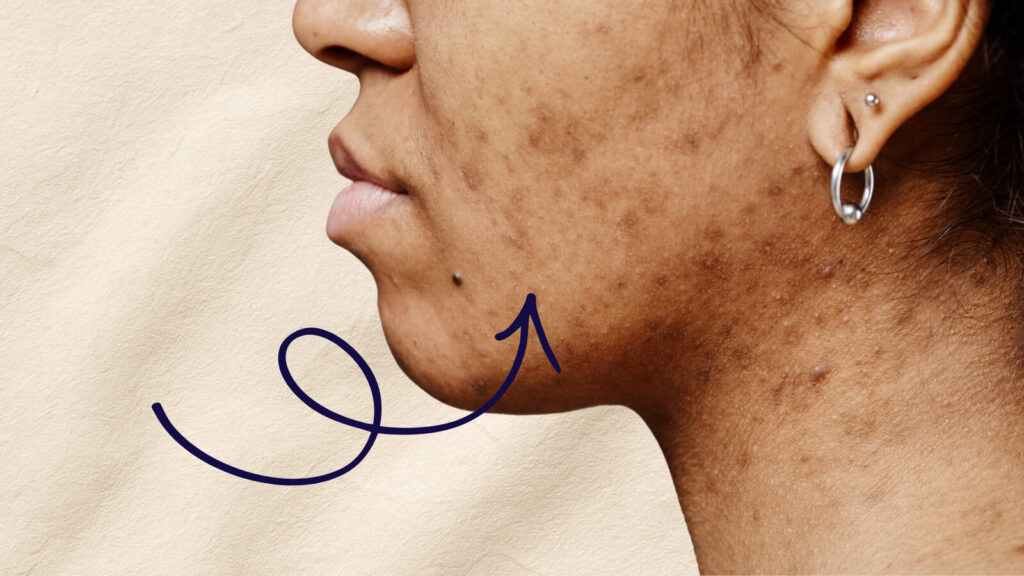
Hyperpigmentation is a common condition where patches of skin (typically, brown, black, or grey) appear on the face. Although harmless, it can be an aesthetic concern for those who don’t like the disruption to the evenness of their skin tone. It’s caused by an overproduction of melanin from the melanocytes (the cells that produce melanin), and is often a result of:
Skin injury & Post-inflammatory hyperpigmentation (PIH)
Post-inflammatory pigmentation (PIH) occurs when your skin creates extra melanin after being injured or irritated, leading to dark spots. It’s one of the most common causes of hyperpigmentation, with around 65% of patients with dark skin experiencing it in some form after skin trauma, such as a wound, cut, burn, rash, or acne breakout.
Melasma
Melasma is a type of hyperpigmentation that appears as brown or grey colored symmetrical patches on the face, typically around the chin, cheek, forehead, or upper lip. It primarily affects women (around 90% of cases), and can be caused by several factors, such as hormonal changes, sun exposure, heat, or a genetic predisposition.
Medications
About 10% to 20% of cases of hyperpigmentation are caused by pharmaceutical drugs, including medications and antibiotics. Some medications are more known to trigger hyperpigmentation than others, such as nonsteroidal anti-inflammatory drugs (NSAIDs), oral contraceptives, and blood pressure medicines, as well as drugs that cause sensitivity to light.
Medical Conditions
Sometimes, hyperpigmentation can appear due to an underlying medical condition that disrupts your hormone balance. Examples include Polycystic Ovary Syndrome (PCOS), autoimmune adrenal insufficiency (Addison’s disease), or thyroid disorders.
Why is Hyperpigmentation More Common in People With Darker Skin Tones?
Because darker skin tones have higher levels of melanocytes, when the skin is injured, these melanin-producing cells go into overdrive, producing an excessive amount of pigmentation that turns into unwanted dark spots.
These spots tend to be more severe and longer-lasting in those with darker skin tones—in fact, hyperpigmentation is one of the top five most commonly diagnosed skin conditions for those with black or brown skin.
Is There a Way to Prevent Hyperpigmentation?
Just because darker skin tones are more prone to hyperpigmentation doesn’t mean there aren’t steps you can take to minimize the severity or likelihood of it happening. Remember to:
- Be gentle! Avoid aggressively scratching or rubbing your skin, especially when it’s inflamed.
- Treat signs of inflammation, such as a rash or breakout, right away.
- Avoid harsh or irritating skincare products or exfoliants.
- Wear sunscreen every day! (UV rays can worsen hyperpigmentation.)
4 Treatments That Help With Hyperpigmentation on Darker Skin
1. Chemical Peels
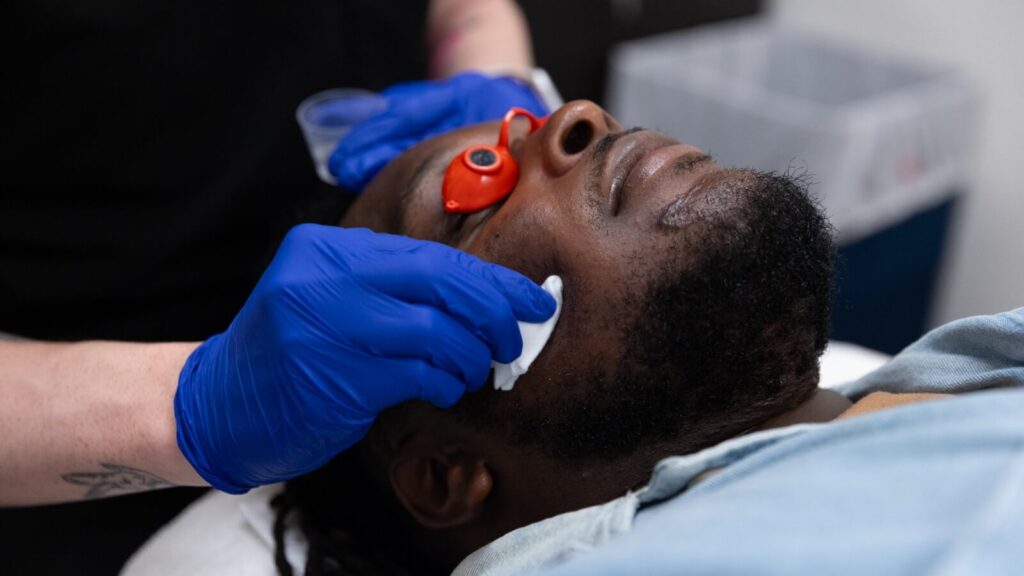
Chemical peels are an incredibly effective way to reduce the appearance of hyperpigmentation! That’s because they’re designed to improve your skin’s appearance by removing superficial layers to reveal the fresh, even skin that lies beneath.
Chemical peel treatments can range in intensity, and at AESTHETICS 360°, we offer everything from light peels to deep peels. As an added benefit, chemical peels also contain plenty of replenishing ingredients, such as alpha hydroxy acids (AHAs), retinoids, and antioxidants. That means your skin won’t just experience a reduction in hyperpigmentation, but you may also experience a reduction in the appearance of enlarged pores and fine lines, and notice improved skin texture. Overall skin tone will also appear brighter!
2. Microneedling
Microneedling (also known as collagen induction therapy) is a non-surgical treatment that involves the use of thin needles (usually ranging from 0.5 mm to 2.5 mm in length) puncturing the upper layers of your skin, creating “micro” channels. (Learn more about microneedling for darker skin tones!)
These “micro” channels cause the skin to react as though it were injured, forcing it to stimulate the production of collagen and elastin, as well as increase blood flow. The newly formed collagen and elastin then give strength and firmness to the skin, while also helping accelerate cell turnover. This cell turnover then causes you to shed the hyperpigmented skin!
3. Moxi Laser Treatment
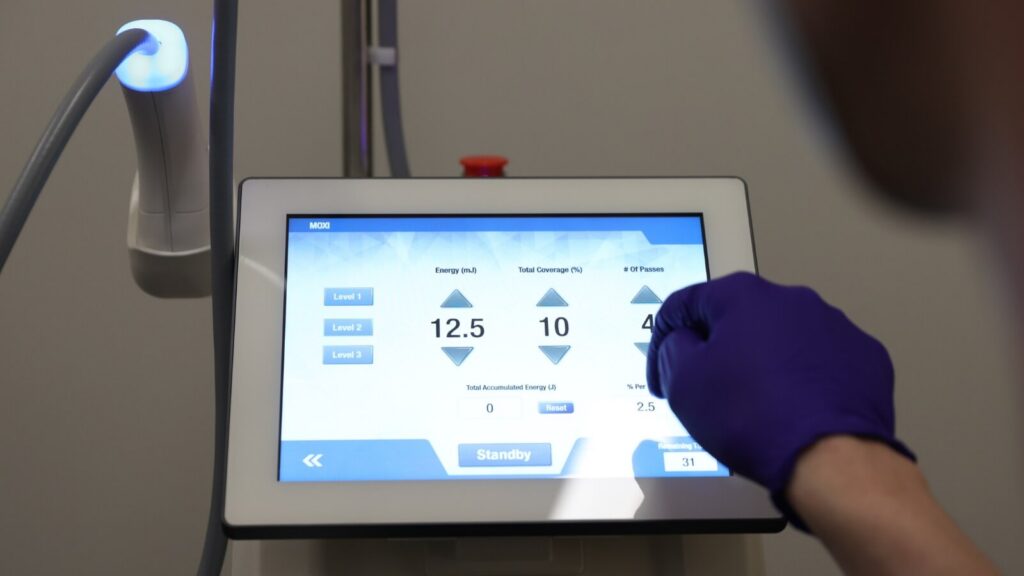
The Moxi laser treatment is considered the gold standard for treating hyperpigmentation! That’s because it uses fractionated waves to deliver a pattern of tiny, evenly spaced microbeams to your skin. These micro-coagulations are non-ablative, which means they don’t damage or remove the skin’s surface, but rather heat the deeper layers of skin.
By heating the lower layers of skin, it kick-starts your body’s natural healing process and promotes new, healthy cell growth and collagen production. These fresh cells then, in turn, help reduce the appearance of hyperpigmentation (as well as melasma, fine lines, and uneven skin texture).
4. Medical-Grade Skincare
For those interested in a less intensive way to help hyperpigmentation, then medical-grade skincare is the way to go! Not only are medical-grade products backed by clinical research, but most importantly, they’re formulated with high concentrations of active ingredients, such as hydroquinone (known as the gold standard for lightening pigmentation), retinoids, vitamin C, and antioxidants.
These ingredients can do wonders when it comes to accelerating cell turnover and fading hyperpigmentation! And although these ingredients can also be found in drugstore skincare products, they tend to appear in lower concentrations and contain irritating additives. At the end of the day, medical-grade skincare is simply more potent!
What to Consider When Choosing Where to Receive Treatment for Hyperpigmentation
It’s simply a matter of science that black and brown skin tones are structurally and functionally different in how they respond to aesthetic treatments. That’s because darker skin tones tend to have:
- A thicker dermal layer
- Stronger skin barrier functions
- Increased risk of keloid scarring
This means hyperpigmentation reduction methods that work well on people with lighter skin tones won’t necessarily work the same on those with darker skin tones. As a result, treatment for patients with darker skin tones requires a customized approach, especially as it relates to aspects like application methods, aftercare protocols, and session frequency.
That’s why it’s crucial to look for a licensed med spa that has experience working with patients of color! Don’t be afraid to ask to see before-and-after pictures of patients with similar skin tones, and discuss how they adjust their steps to address hyperpigmentation on darker skin.
Contact AESTHETICS 360° for Help With Hyperpigmentation

At AESTHETICS 360°, we’re here to help treat hyperpigmentation! Our clinical aestheticians and aesthetic nurse specialists have years of experience working with patients of all skin types and tones, and as a result, will know how to uniquely customize your treatment to get real results!
Just give us a call, fill out our form, or complete a virtual assessment today. It’s time to get started on your journey towards experiencing the 360-degree difference!